A covered entry can look expensive or unfinished before anyone reaches the front door. That is why a porch ceiling deserves more attention than it usually gets, because the overhead surface frames the whole outdoor room. A flat sheet panel may close the space, but it rarely gives the kind of detail that makes a home feel settled, cared for, and built with intention. Tongue and groove installation brings shadow lines, warmth, and old-house character without making the design feel fussy. For many American homes, from Southern farmhouses to coastal cottages and suburban Craftsman entries, this choice feels familiar in the best way. It also works with practical updates, especially when homeowners use trusted project guidance from a home improvement planning resource before buying boards or calling a contractor. The real win is not the boards alone. It is the way they handle proportion, weather, color, lighting, and finish as one complete decision.
Planning the Porch Ceiling Before Boards Go Up
The best overhead porch work starts before the first board is cut. A clean result depends on framing, moisture control, board direction, fastener choice, and the way the finished surface relates to the house. Skipping that planning stage can turn a simple upgrade into a ceiling that waves, gaps, stains, or feels visually wrong after one humid season.
Why Tongue and Groove Boards Need a Better Starting Point
Tongue and groove boards hide their strength in the joint. One edge locks into the next, which helps create a tight field of material across the overhead plane. That does not mean the boards can rescue poor framing. If the ceiling joists dip, twist, or carry old nail heads, the finish will show those flaws in quiet but annoying ways.
A homeowner in Atlanta might choose pine for a covered front entry, then wonder why the surface looks uneven after paint. The answer often sits behind the finish. Old porch framing may have settled near the steps, or a past repair may have left one joist proud of the others. A few hours spent checking the plane with a long straightedge can save days of frustration later.
The counterintuitive part is simple: the prettiest ceiling depends on the ugliest work. Blocking, shimming, and fastening strips rarely show up in finished photos, but they decide whether the final surface feels crisp or careless. That is where good installers earn their money.
Matching Board Direction to the Shape of the Porch
Board direction changes the whole feel of a covered space. Running boards perpendicular to the house can pull the eye outward and make a shallow entry feel deeper. Running them parallel to the front wall can make a wide porch feel calm and settled. Neither choice is automatically right.
On a narrow bungalow porch in Ohio, boards running from the door toward the yard may make the space feel more welcoming. On a long wraparound porch in Texas, a parallel layout can reduce visual busyness and keep the ceiling from feeling like a runway. The house decides more than the trend does.
Covered porch design should never copy a photo without checking the shape of the actual home. A detail that looks charming on a deep farmhouse overhang may feel crowded on a six-foot entry cover. The smartest layout is the one that makes the structure look intentional from the street and comfortable from the rocking chair.
Choosing Materials That Can Handle Weather and Still Look Classic
Material choice carries more weight outdoors than it does inside. A ceiling under a roof still deals with damp air, wind-driven rain, heat, pollen, insects, and seasonal movement. The goal is not to pick the fanciest board. The goal is to pick the material that will age well in the exact climate where the house stands.
Where Exterior Wood Ceiling Materials Make Sense
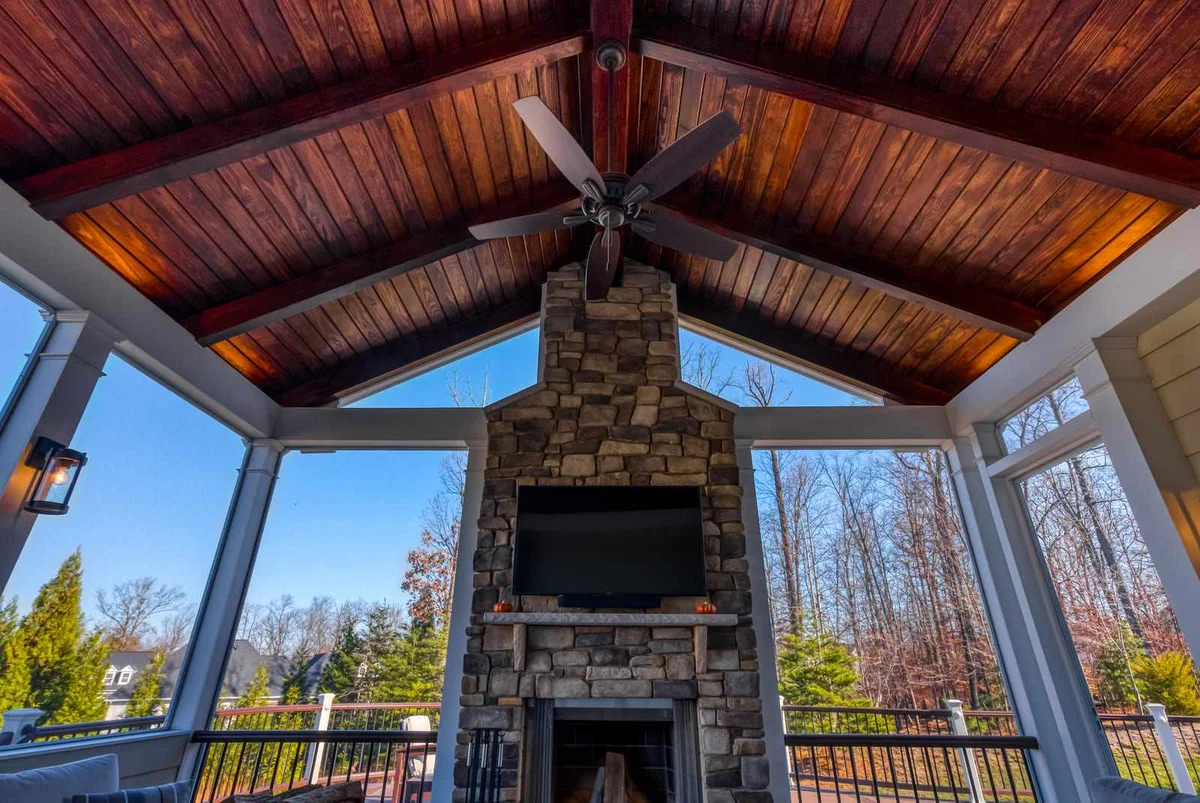
An exterior wood ceiling brings warmth that manufactured panels often struggle to match. Pine, cedar, cypress, and fir each have a different personality, and each reacts differently to moisture. Cedar gives a natural outdoor feel, while primed pine works well when the final look will be painted. Cypress can be excellent in damp regions, though price and availability vary.
In Florida or coastal North Carolina, humidity pushes every material harder. Boards need time to acclimate before installation, and all faces should be sealed before they go overhead. Many failures start when only the exposed face gets paint or stain. Moisture enters the back side, the board moves, and the finish begins to tell on the shortcut.
The unexpected truth is that stain is not always the lower-maintenance choice. A stained exterior wood ceiling can look beautiful at first, but UV exposure and moisture can make touch-ups more visible. Paint, when applied over properly sealed boards, can sometimes give a more forgiving long-term finish.
When Beadboard Porch Ceiling Style Fits Better
Beadboard porch ceiling details suit homes that need a finer, more traditional texture. The small bead line creates a softer pattern than wider planks, which helps on compact entries or older homes with delicate trim. It can also look more period-correct on cottages, Cape Cod homes, and Victorian-inspired porches.
A Denver homeowner with a small covered stoop may find wide planks too heavy for the scale of the entry. Beadboard gives the surface rhythm without stealing attention from the door, sidelights, or columns. That is the kind of small design call that makes a front elevation feel balanced.
Still, beadboard porch ceiling material has to be chosen with care. Interior-grade panels do not belong outside, even under cover. If the label, primer, or manufacturer guidance does not support exterior protected use, the lower price can become expensive after swelling edges and peeling paint show up.
Porch Ceiling Installation Details That Separate Clean Work From Regret
Good carpentry is not loud. It shows itself in tight lines, smart gaps, clean cuts, and a finish that does not draw attention for the wrong reason. The middle stage of a project is where most mistakes happen, because the ceiling begins to look close to done before the important details are actually finished.
How Fasteners, Gaps, and Trim Control Movement
Wood moves. It expands across its width, shifts with humidity, and reacts to seasonal changes long after the ladder is gone. A tight ceiling with no breathing room may look perfect on installation day and then buckle when summer air rolls in. Small expansion gaps at the edges give the field somewhere to move.
Fasteners matter too. Stainless or exterior-rated finish nails help prevent rust stains, especially in damp regions or near salt air. Blind nailing through the tongue can keep the face clean, but the installer still needs enough holding power for overhead use. A ceiling is not the place for weak attachment.
Trim should hide movement, not fight it. Crown, cove, or simple flat trim can cover the perimeter gap while creating a finished border. This is also where many DIY jobs fall short. The boards may be decent, but the edge trim exposes every uneven cut like a bad frame around a good painting.
Cutting Around Lights, Fans, and Porch Features
Lighting and fan boxes need planning before the board pattern reaches them. A centered fixture should land cleanly within the layout, not awkwardly across a narrow ripped piece. Recessed lights should align with the porch architecture, not merely with whatever joist bay happened to be open.
A covered entry in Tennessee might include a ceiling fan, two recessed lights, and a hanging lantern near the door. Each element needs blocking, rated electrical boxes, and clean circular cuts. If the boards go up first and the fixtures are handled later, the finished ceiling can look patched instead of planned.
Tongue and groove boards also make access harder after installation. That means wiring, fan support, and junction boxes should be settled early. The boring coordination between carpenter and electrician is what keeps the final surface from becoming a map of compromises.
Finishing Choices That Keep the Classic Look From Feeling Old
A classic ceiling should not feel like a museum piece. Color, sheen, stain depth, and trim contrast can make the same boards read coastal, farmhouse, Craftsman, colonial, or modern traditional. The finish decides whether the project blends into the home or starts acting like a separate decoration.
Paint Colors That Change the Mood Overhead
Painted ceilings remain popular because they control the mood with confidence. Soft white keeps the porch bright and clean. Pale blue has deep roots in Southern porch traditions and still works when it suits the house color. Warm gray, muted green, or cream can calm a strong exterior palette without making the entry bland.
A New England colonial with black shutters may look best with a crisp white overhead surface. A Lowcountry porch with haint-blue paint may feel more regional and personal. A Craftsman home with earthy siding may need a warmer tone so the ceiling does not look detached from the rest of the facade.
The surprising move is sometimes restraint. Homeowners often want the ceiling to announce the upgrade, but the best finish may be the one guests feel before they notice. A quiet color can make columns, doors, brick, and lighting look better without demanding credit.
Stain, Sealers, and Maintenance Reality
Stained wood offers grain, depth, and warmth. It can make a covered porch feel closer to a room than a pass-through. Cedar and cypress take stain in a way that feels natural outdoors, while some pine boards need conditioning to avoid blotchy color. Test samples are not optional if the final look matters.
Maintenance has to be honest from the start. A shaded porch in Oregon behaves differently from a west-facing entry in Arizona. Sun, dust, moisture, and temperature swings all change how finishes age. A homeowner who wants low upkeep should not choose a finish that needs frequent attention to stay handsome.
Covered porch design works best when beauty and maintenance agree with each other. If you love the look of stained wood but dislike refinishing, choose a protected area, a stable species, and a finish system made for exterior exposure. Romance is nice. Maintenance is real.
Bringing the Whole Project Together With Confidence
The final result should feel like it always belonged to the house. That does not happen by accident. It happens when the board size, trim, color, lighting, and material all support the same design language. A ceiling can be simple and still feel rich when the details are disciplined.
Reading the House Before Making Final Design Calls
Every house gives clues. Roof pitch, column style, siding texture, window trim, door color, and porch depth all point toward the right ceiling treatment. A farmhouse can usually carry wider boards. A cottage may want bead lines. A brick colonial may need painted boards that feel refined, not rustic.
A suburban home in Missouri with vinyl siding and a modest front entry may not need a dramatic stained ceiling. It may need clean white boards, tidy trim, and better lighting. That choice sounds plain on paper, but it can lift the whole entry when done well.
Exterior upgrades fail when they chase a look without listening to the building. The ceiling should not be the loudest voice on the porch. It should make the door, roofline, and trim feel more composed.
Deciding Between DIY and Professional Installation
A careful DIY homeowner can handle this project on a small, square, well-framed porch. The work requires accurate measuring, overhead nailing, safe ladder habits, and patience with trim. It also requires comfort around exterior-rated materials and moisture details. Pride alone will not keep boards flat.
Larger porches, uneven framing, fan boxes, complex corners, and historic homes usually deserve a skilled carpenter. Labor costs more, but mistakes cost in quieter ways. Bad cuts, exposed movement gaps, wrong fasteners, and poor sealing can shorten the life of the work.
The decision comes down to risk, not ego. If the porch is simple and you have the tools, take your time and do it right. If the space has complications, hire the person who has already solved them on someone else’s house.
A refined overhead finish changes how a home greets people before the door opens. It adds texture, shade, and a sense of care that cheap flat panels rarely deliver. The smartest porch ceiling choice is not the most expensive one; it is the one that respects weather, architecture, and the way your family actually uses the space. Start by studying the structure, then choose boards and finishes that make sense for your climate. If the details feel beyond your tools or time, bring in a carpenter before shortcuts become permanent. Build the ceiling as if you will look up at it every evening, because sooner or later, you will.
Frequently Asked Questions
What is the best wood for tongue and groove boards on a covered porch?
Cedar, cypress, primed pine, and fir can all work when rated and finished for exterior protected use. The best choice depends on climate, budget, finish style, and maintenance expectations. Damp or coastal areas need stronger moisture planning than dry inland regions.
Can I install an exterior wood ceiling over plywood?
Yes, but the existing surface must be dry, sound, flat, and properly fastened. You may still need furring strips for airflow, alignment, or secure nailing. Covering damaged plywood traps problems instead of fixing them, so inspect carefully before installation begins.
Should tongue and groove boards be painted before installation?
Pre-finishing is usually the safer move for outdoor overhead work. Sealing all sides helps reduce uneven moisture movement after the boards are installed. Final touch-up can happen after fastening, but the back faces and edges need protection before they disappear.
Is a beadboard porch ceiling good for older homes?
It often suits older homes because the narrower lines feel traditional and scaled. The key is using exterior-rated material, not interior decorative panels. Paired with proper trim and paint, it can make a small entry feel detailed without looking crowded.
How much gap should be left around the edge of the ceiling?
Most wood ceilings need a small perimeter expansion gap, often hidden by trim. The exact gap depends on board width, species, climate, and manufacturer guidance. Leaving no room for movement can cause buckling, especially in humid seasons.
Can I put a ceiling fan in tongue and groove boards?
Yes, but the fan needs a properly rated electrical box secured to framing, not to the finish boards. Plan the fan location before installation so cuts look clean and support is correct. A heavy fixture should never depend on decorative boards alone.
What color works best for a covered porch design?
White, cream, pale blue, soft gray, and muted green are common choices because they brighten shaded areas without clashing. The best color should relate to siding, trim, door color, and regional style. Test samples overhead before committing.
How long does a wood porch ceiling last?
A well-installed, well-sealed ceiling under proper cover can last many years. Lifespan depends on moisture exposure, ventilation, fasteners, finish quality, and maintenance. Regular checks for peeling, staining, insect activity, and open joints help catch small problems early.