Laundry rooms turn messy faster than almost any other corner of the house. One bottle leaks, one box sits on the dryer, one pack of dryer sheets gets shoved behind the washer, and the whole room starts working against you. A smart wall cabinet installation gives detergent, stain sprays, towels, cleaning refills, and small tools a fixed home above the work zone instead of across every open surface. For American homeowners, especially in compact suburban laundry closets or garage laundry areas, the goal is not fancy storage for its own sake. The goal is daily control. A cabinet should be high enough to clear appliances, strong enough to hold heavy supplies, and placed where your hand naturally reaches during laundry. Good planning also protects walls, keeps products away from kids and pets, and makes the room feel finished. If you care about practical home upgrades that add order without wasting space, a trusted home improvement planning resource can help you think beyond looks and focus on how the room will work after the project is done.
Wall Cabinet Installation Planning Starts Before the First Screw
A laundry cabinet succeeds or fails before the drill comes out. The biggest mistake is treating the wall like empty space instead of a working surface with studs, plumbing, vents, outlets, door swings, appliance lids, and human reach all fighting for room. A cabinet that looks centered may still be wrong if it blocks a washer lid or forces you to stretch over a hot dryer every time you need detergent.
Measuring Around Washers, Dryers, and Reach Zones
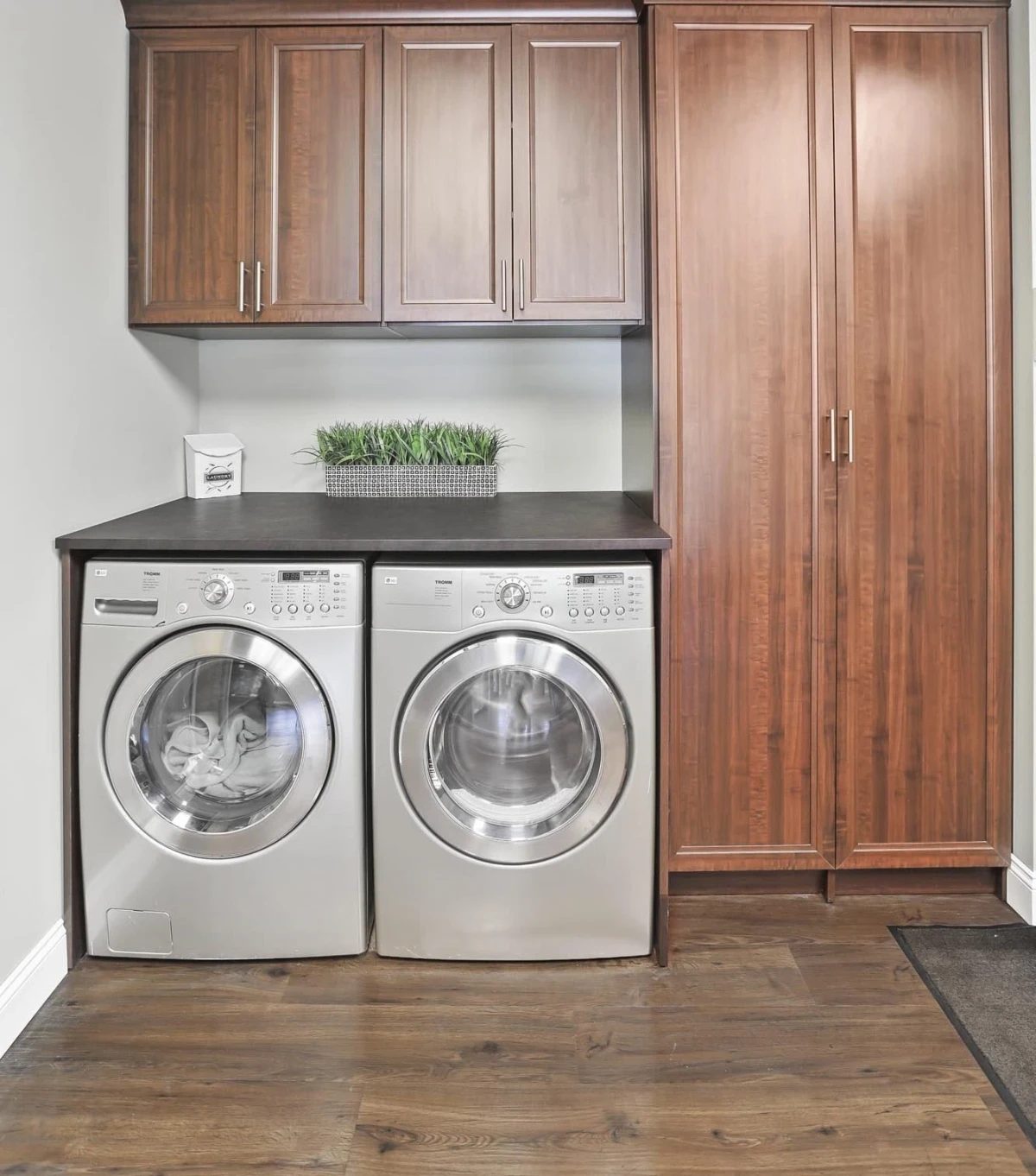
Good laundry room cabinet ideas start with the appliances, not the cabinet box. Front-load machines give you more freedom because the cabinet can sit lower above a counter or folding shelf. Top-load washers demand more vertical clearance, especially if the lid opens wide and needs room for your hand to move without hitting the cabinet face.
A common setup in a U.S. home may have a 27-inch washer and dryer pair with a small gap between them. That sounds generous until you add hoses, dryer duct space, baseboards, and a door that swings inward. Tape the cabinet outline on the wall before buying anything. Stand where you sort clothes, reach for detergent, and pull items from the dryer. Your body will tell you what the tape measure misses.
Reach matters more than symmetry. A cabinet mounted too high may look clean in a photo, but it becomes dead storage for anything used often. Put daily supplies on the lower shelf and reserve upper shelves for bulk refills, spare rags, and seasonal cleaning products. Pretty storage that annoys you every Tuesday is bad storage.
Choosing Cabinet Depth Without Crowding the Room
Laundry storage cabinets often come in depths that seem harmless on paper. Twelve inches feels modest until the cabinet hangs above a narrow walkway between the machines and the opposite wall. In a closet laundry area, even a shallow cabinet can make the space feel boxed in if the doors swing into your shoulder.
Deeper cabinets earn their keep when you store large detergent jugs, paper towels, or cleaning bins. Still, depth should follow use. If the cabinet sits above side-by-side machines, 12 inches often works better than 15 or 18 inches because it keeps the wall useful without making the room feel heavy. In a garage laundry area, deeper storage may make sense because the room usually has more air around it.
Cabinet door style also changes the experience. Standard hinged doors are simple and affordable, but they need swing space. Sliding doors can help in narrow rooms, while open shelving works for baskets and towels but exposes every label and spill. The counterintuitive truth is that closed cabinets do not always create less mess. They only hide mess unless the shelves match what you store.
Strength, Studs, and Hardware Decide How Safe the Cabinet Feels
After layout comes the part homeowners should respect most: support. Detergent is heavy, and laundry rooms invite overload because people store everything from bleach to pet shampoo in the same cabinet. A cabinet that holds a few towels during installation may sag once bulk supplies move in.
Finding Studs and Building a Reliable Mounting Path
Laundry cabinet mounting should never depend on drywall alone. Studs carry the load, and the safest installation starts by locating them accurately. A stud finder helps, but it should not be treated like a magic wand. Confirm stud locations with small test holes in hidden spots, outlet placement clues, or a thin finish nail where the cabinet will cover the mark.
Most wall studs in American homes sit 16 inches on center, though older homes and renovated spaces can surprise you. Laundry rooms are also full of hidden lines. Water pipes, drain vents, gas lines, and electrical cables may run in the wall behind appliances. That is why shallow pilot holes and careful inspection matter. A screw driven with confidence into the wrong place can turn a storage project into a repair bill.
A ledger board can make wall cabinet installation safer and easier. Temporarily fastening a straight board beneath the cabinet line gives the cabinet a resting ledge while you level and secure it. This small trick removes the panic of holding weight in midair while trying to hit studs. Professionals use simple supports because gravity has no patience.
Matching Screws, Rails, and Cabinet Boxes to Real Loads
Cabinet strength is a system, not one part. A strong screw in a weak cabinet back still fails. A solid cabinet on poor anchors still moves. Look for cabinets with sturdy backs, reinforced hanging rails, and shelves that will not bow under bottles. Cheap cabinets can work in light-duty spaces, but laundry products punish flimsy construction faster than folded linens do.
Use cabinet screws long enough to bite into studs after passing through the cabinet back and drywall. Many installers use screws around 2½ to 3 inches, but wall conditions decide the final choice. Washers under screw heads can spread pressure when the cabinet rail allows it. Avoid drywall screws for cabinet hanging; they are brittle and made for a different job.
A practical test helps after mounting. Pull gently downward and forward before loading anything. Watch for cabinet movement, wall flex, or gaps opening at the top. Then load heavier supplies on lower shelves and closer to the cabinet sides. The best storage plan respects structure even after the tools are packed away.
Storage Layout Should Follow How Laundry Actually Happens
A cabinet can be mounted perfectly and still work poorly. The inside layout must match the rhythm of laundry: treat stains, add detergent, dry, fold, restock, and clean spills. When the shelf plan follows that rhythm, the room feels calmer without needing more square footage.
Grouping Detergents, Stain Tools, and Cleaning Refills
Detergent supply storage works best when products are grouped by task. Keep detergent, pods, scent beads, and fabric softener together, but separate stain removers and brushes so they do not vanish behind big bottles. Small plastic bins can hold loose items without turning the shelf into a junk drawer.
Households with children or pets need more care. Pods, bleach, and strong cleaners belong behind closed doors and out of easy reach. A magnetic child lock or cabinet latch may look like a small detail, but it changes the safety level of the room. Laundry products are designed to work hard on fabric, which means they deserve respect around curious hands and paws.
Real homes also need spill planning. Put a wipeable liner on shelves that hold liquids. Store bottles upright with labels facing forward. Leave a little empty space instead of packing every inch. That gap is not wasted. It gives you room to remove one item without knocking over three others.
Creating Zones for Folding, Overflow, and Fast Restocking
A cabinet should support the surface below it. If you fold clothes on a counter over front-load machines, place dryer sheets, lint rollers, and mesh bags near that zone. If the laundry area sits near a mudroom, reserve a shelf for shoe spray, pet towels, or reusable shopping bags. Storage feels natural when it reflects the room’s real job, not a showroom version of it.
Bulk buying creates another challenge. Many American households shop at Costco, Sam’s Club, Target, or Walmart and bring home oversized containers that do not fit standard shelves. Instead of forcing those bottles into daily-use space, decant a smaller amount into a safe, labeled container and store the bulk refill higher or elsewhere. This keeps the cabinet useful every week.
A small inventory habit helps more than people expect. When the backup detergent moves to the front, add it to the shopping list. The cabinet becomes more than storage; it becomes a quiet system. That is the kind of order you feel when Sunday laundry does not turn into a scavenger hunt.
Finishing Details Make the Cabinet Look Built Into the Room
The final stage separates a mounted box from a finished upgrade. Laundry rooms often have uneven walls, exposed hoses, utility trim, and lighting that casts shadows across every gap. Clean finishing work makes the cabinet feel intentional, even when the room itself is modest.
Level Lines, Trim Gaps, and Door Alignment
A level cabinet does not always look level in an older house. Floors slope, ceilings dip, and appliances may sit slightly off because of adjustable feet. Trust the level first, then manage the visual gaps with trim, caulk, or careful spacing. Chasing a crooked ceiling usually makes the cabinet doors betray you later.
Door alignment deserves attention after the cabinet is loaded. Weight can shift the box slightly, and hinges may need a small adjustment. Many modern hinges allow movement up, down, in, and out with a screwdriver. Take the time to even the reveals. Crooked doors make new cabinets look tired on day one.
Paint and finish choices should respect moisture. Laundry rooms may not feel wet like bathrooms, but humidity, steam, and spills still show up. Semi-gloss or satin paint around the cabinet wipes cleaner than flat paint. If the cabinet sits near a sink, choose materials and finishes that can handle splashes without swelling at the edges.
Lighting, Labels, and Small Details That Keep Order Alive
Under-cabinet lighting can change how the room works. A simple plug-in or hardwired light makes it easier to treat stains, read labels, and sort dark clothing. In windowless laundry closets, this is not decoration. It is function. Bad light makes even good storage harder to use.
Labels help when more than one person uses the room. They do not need to look like a craft project. Simple shelf labels for stain care, refills, towels, and pet items keep the system from depending on one person’s memory. The best cabinet setup survives busy weeks because it tells everyone where things belong.
A final pass should focus on touch points. Add soft-close bumpers if doors clap shut. Install knobs or pulls that feel comfortable with wet hands. Check that no cabinet edge sits where someone might hit their head while unloading the dryer. A laundry room is a working room, and working rooms reward details you can feel.
A finished cabinet should make laundry less annoying, not merely more organized. The smartest wall cabinet installation brings safety, reach, storage weight, and daily habits into one plan. It gives every bottle a place, clears the tops of machines, and turns a cramped utility wall into a dependable part of the house. For U.S. homeowners, the best upgrade is not the biggest cabinet or the most expensive finish. It is the cabinet that fits the room’s true pressure points: heavy detergent, limited reach, awkward appliances, and the constant churn of family laundry. Measure twice, mount into structure, load with intention, and treat the final details like part of the job. Start with the wall you already have, then build storage that makes the next load easier before it even begins.
Frequently Asked Questions
How high should laundry room wall cabinets be above a washer and dryer?
Leave enough clearance for appliance lids, hookups, and comfortable reach. Front-load machines often allow lower cabinets, especially above a counter. Top-load washers need more space so the lid opens fully without hitting the cabinet bottom or blocking your hands.
What is the best depth for laundry storage cabinets?
Twelve inches works well for many laundry rooms because it stores common supplies without crowding the walkway. Deeper cabinets may fit bulk bottles, but they can feel heavy in tight spaces. Match cabinet depth to the room, not to the biggest container you own.
Can I install laundry cabinets without hitting wall studs?
Drywall alone is not safe for loaded laundry cabinets. Use studs, a proper hanging rail, or blocking added inside the wall. Heavy detergent, cleaners, and towels add weight fast, and weak mounting can pull away without much warning.
Are open shelves better than closed cabinets in a laundry room?
Open shelves make items easy to grab, but they expose clutter and product labels. Closed cabinets hide supplies and protect children from cleaners. A mix often works best: closed storage for chemicals and open shelves for towels or baskets.
What should I store in laundry room wall cabinets?
Store detergent, stain removers, dryer sheets, cleaning refills, lint rollers, mesh bags, and spare towels. Keep heavy liquids on lower shelves when possible. Place dangerous cleaners higher, behind closed doors, and away from children or pets.
Do laundry cabinets need moisture-resistant materials?
Moisture-resistant finishes help because laundry rooms deal with humidity, spills, and cleaning products. Painted wood, plywood boxes, laminate, or sealed cabinet surfaces often perform better than raw particleboard edges. Good ventilation also protects cabinet life.
Should laundry cabinets go to the ceiling?
Ceiling-height cabinets add storage, but upper shelves become hard to reach. They work best for rarely used supplies, seasonal items, or bulk refills. In small rooms, shorter cabinets may feel lighter and leave space for better lighting.
How do I keep detergent bottles from making cabinet shelves messy?
Use wipeable shelf liners, shallow bins, and upright bottle placement. Keep daily products in front and backups behind or above. Leave space between containers so one sticky bottle does not turn the entire shelf into a cleanup job.