

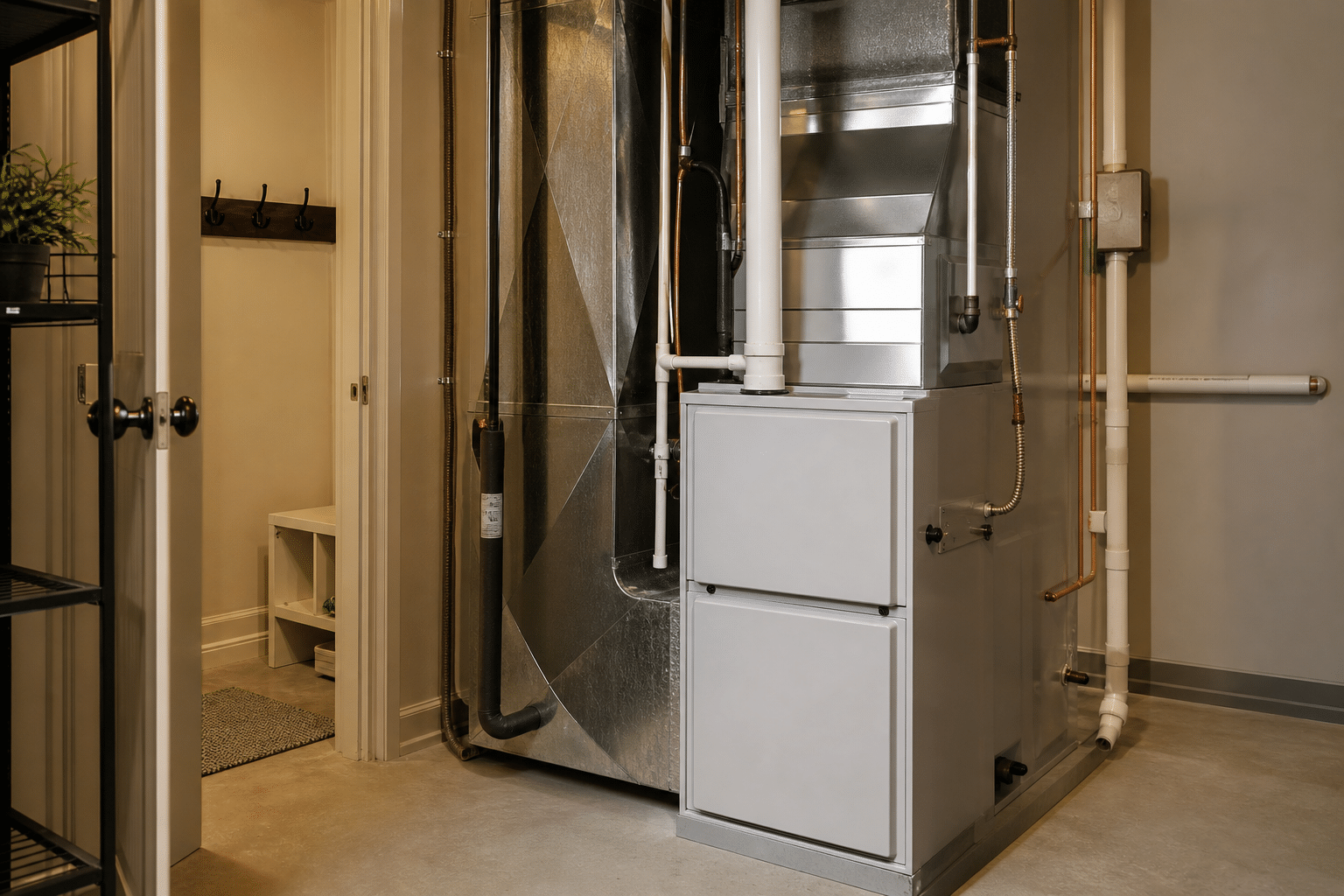
Replacing a major home comfort system is rarely an expense homeowners look forward to. When a furnace starts showing its age, the immediate concern is usually staying warm through winter. Air conditioning may seem like a separate issue, especially if the existing unit still cools the house reasonably well.
However, the two systems are often more connected than homeowners realize. In many houses, the furnace and central air conditioner share ductwork, and the furnace’s blower helps circulate cooled air during summer. That connection raises an important question: if one system needs replacing, is it worth installing both at the same time?
For homeowners in Pine City, Rush City, and other parts of Minnesota, the answer depends on the age of the equipment, its condition, the cost of installation, and how well the existing components work together. Replacing both can be a practical decision in some homes, but it is not automatically the best choice for every budget.
How a Furnace and Air Conditioner Work Together
A furnace and an air conditioner perform different jobs throughout the year. The furnace provides heat during cold weather, while the air conditioner removes heat from indoor air during warmer months.
In a typical central HVAC system, both use the same network of supply and return ducts. The furnace’s blower circulates warm air in winter and may also move cooled air through the house in summer. The air conditioner has its own outdoor unit and indoor evaporator coil, which works with the rest of the system to remove heat and humidity.
Because the equipment shares parts of the air distribution system, compatibility matters. The indoor coil, outdoor condenser, blower, and controls need to work together according to the manufacturer’s specifications.
That does not mean the furnace and air conditioner must always be replaced together. A newer furnace may be perfectly suitable for continued use with a compatible replacement air conditioner. The important step is having a contractor evaluate the complete setup before recommending new equipment.
When Replacing Both Systems Makes Sense
There are several situations in which installing a furnace and air conditioner together deserves serious consideration.
Both units are approaching the end of their useful lives
If your furnace and air conditioner are both older and showing signs of wear, replacing them together may be more practical than scheduling two separate projects. You can plan the investment in advance rather than waiting for the second system to fail.
Age alone should not determine the decision. A well-maintained system may continue operating reliably, while a younger unit with a significant fault may need attention sooner than expected. Ask a qualified technician to assess the condition of both systems independently.
You want to avoid two separate installation projects
Installing both systems during one project may reduce duplicated labor, travel, and setup costs. Depending on the equipment and contractor, a combined installation may also qualify for package pricing.
Get a written estimate that shows the cost of replacing each unit separately and the price of doing both together. This makes it easier to determine whether the combined proposal offers meaningful savings.
Remember that a larger project still requires a larger upfront investment. A package discount is worthwhile only if replacing both systems is justified by their condition and your long-term plans.
The existing equipment is incompatible with a new component
Modern air conditioners are designed to work with specific indoor coils and other system components. Keeping an older component may limit performance or prevent the new equipment from achieving its advertised efficiency rating.
A contractor should verify the compatibility of the proposed combination, including any applicable manufacturer requirements and warranty conditions. If the existing furnace and indoor coil can work properly with a new outdoor unit, a full replacement may not be necessary.
On the other hand, if the existing equipment cannot support the proposed system effectively, replacing additional components may be a sensible investment.
When Replacing Only One Unit Is the Better Option
There is no reason to replace a working system simply because another component needs attention.
Suppose your furnace was installed only a few years ago, operates reliably, and is compatible with the replacement air conditioner you need. In that situation, keeping the furnace could save a substantial amount of money.
The same principle applies if the air conditioner is relatively new but the furnace has developed a serious fault. If the cooling equipment remains in good condition and the components are compatible, replacing the furnace alone may be reasonable.
Budget is another consideration. Some homeowners cannot comfortably afford both systems at once, even when replacing them together might offer installation savings. A contractor can explain whether a safe, compatible single-unit replacement is possible now and what options may be available for the future.
Before approving a combined installation, ask for a clear explanation of why each unit needs replacement. A trustworthy recommendation should be based on the condition and compatibility of the equipment rather than a blanket rule that both systems must always be changed together.
Consider Minnesota’s Seasonal Heating and Cooling Needs
Minnesota’s climate makes this decision particularly important. Winters can bring prolonged periods of freezing temperatures, while summer weather can create a different set of comfort challenges.
A dependable furnace is essential for maintaining indoor temperatures during winter. An appropriately sized air conditioner can help manage summer heat and humidity. Choosing equipment that suits both the home and the local climate can make a difference in everyday comfort.
Homeowners should also consider the building itself. Insulation, window quality, air leakage, ceiling height, and duct condition all affect how much heating and cooling a house needs.
For example, a drafty older home may require air-sealing or insulation improvements alongside an equipment replacement. Installing a larger furnace without addressing those issues may not solve every comfort problem.
Ask your contractor to evaluate the home’s heating and cooling loads instead of selecting equipment solely according to the size of the old units. Proper sizing helps prevent problems associated with equipment that is too large or too small.
Will a Combined Installation Save Money on Energy Bills?
Potentially, but the savings depend on the equipment being replaced and the system selected.
A newer furnace with a higher Annual Fuel Utilization Efficiency (AFUE) rating can convert a greater proportion of its fuel into useful heat under standardized testing conditions. Similarly, an efficient air conditioner can provide cooling while using less electricity than a comparable older unit.
However, buying two new systems does not automatically guarantee lower utility bills. The results depend on the efficiency of the old equipment, the performance of the new system, energy prices, weather, thermostat settings, and the home’s insulation.
Consider a homeowner whose furnace is inefficient and whose air conditioner also struggles to cool the house. Replacing both with properly sized equipment may improve comfort and reduce energy use. By contrast, replacing a reasonably efficient furnace that is only a few years old may offer little financial benefit if the existing unit is already performing well.
Ask the contractor to explain the expected efficiency differences and provide realistic estimates where possible. Treat projected savings as estimates rather than guaranteed amounts.
Do Not Overlook the Cost of Installation Quality
When comparing furnace and air conditioner packages, it is easy to concentrate on equipment prices and overlook how the installation will be handled.
Even high-quality equipment can underperform if it is incorrectly sized, poorly configured, or connected to unsuitable ductwork. Airflow, refrigerant charge, venting, electrical connections, and thermostat compatibility all deserve attention.
Request a written proposal that identifies the equipment models, installation labor, required modifications, removal of old equipment, and applicable permits. Ask what warranties cover the equipment and the contractor’s workmanship.
It is also worth checking whether the contractor will inspect the existing ductwork and determine the appropriate heating and cooling capacity for your home. These steps help ensure that the new system is selected for your actual needs.
Homeowners researching HVAC services can review available heating service information from True North Heating and Air as part of their comparison. Before scheduling work, confirm the company’s current offerings, service area, and installation options directly.
What About a Furnace and Heat Pump Instead?
A conventional furnace and central air conditioner are not the only option for Minnesota homes. Some homeowners may also want to compare a furnace with a heat pump.
A heat pump can provide cooling in summer and heating in appropriate outdoor conditions. In a dual-fuel arrangement, it works alongside a compatible furnace, which can provide additional heat when needed according to the system’s design and controls.
Whether this arrangement makes financial sense depends on the home’s heating requirements, equipment costs, electricity and fuel prices, and the performance of the selected heat pump in cold weather.
A heat pump is not automatically the right choice for every property, just as a conventional furnace-and-air-conditioner combination is not ideal for every household. If you are considering alternatives, ask the contractor to compare the expected operating costs and installation requirements of each option.
The goal is to choose a system that fits the house and your budget rather than selecting equipment simply because it is newer.
Questions to Ask Before Making a Decision
Before agreeing to replace a furnace and air conditioner together, ask the contractor a few practical questions:
- How much useful life does each existing unit appear to have remaining?
- Can the existing furnace or air conditioner safely and effectively work with the proposed replacement?
- What is the price of replacing each unit separately compared with replacing both?
- Will the proposed equipment be properly sized for the home?
- Are the indoor coil, outdoor unit, furnace, and controls compatible?
- What equipment and labor warranties apply?
- Are permits or electrical, ductwork, or venting modifications required?
- What maintenance will the new system need?
The answers should help you understand the trade-offs without pressuring you into a decision. If the recommendation involves replacing equipment that is still in good condition, ask for the technical and financial reasons behind it.
Finding Heating and Cooling Help in East-Central Minnesota
Homeowners in Pine City, Rush City, and nearby communities can benefit from comparing qualified contractors before committing to a major HVAC project.
True North Heating and Air is one company to consider when researching local heating and cooling options. Review its service information, discuss your home’s requirements, and request a written estimate that clearly explains the recommended work.
It is sensible to compare proposals from multiple qualified providers, particularly when replacing two major systems. Look beyond the total price and consider equipment suitability, installation details, warranties, and the contractor’s willingness to answer questions.
If your furnace is unreliable during winter or your air conditioner struggles during summer, do not wait until both systems fail to start researching your options. Planning ahead gives you more time to compare alternatives and schedule the work at a convenient time.
Make the Choice That Fits Your Home
Installing a furnace and air conditioner together can be worthwhile when both systems are aging, compatibility issues need to be addressed, or a combined project offers meaningful installation savings. It can also simplify planning and give homeowners a coordinated heating and cooling system.
However, replacing both is not always necessary. If one unit is relatively new, operates reliably, and can work properly with the replacement equipment, keeping it may be the more financially sensible choice.
For Minnesota homeowners, the best decision comes from evaluating each system individually, considering the home’s heating and cooling needs, and comparing realistic installation costs. With a thorough assessment and a clear written proposal, you can choose an approach that balances upfront spending, long-term performance, and year-round comfort.