
Picture a homeowner who has found the perfect bathroom tile online, then hesitates over three worries: will it last, is the quality real, and will it suit the room? The answer is to buy from a store that names the material and approved use of every tile, so porcelain goes on floors and showers and glazed ceramic goes on walls. Mineral Tiles, an online tile store, is built for exactly this kind of buyer, which makes it a dependable platform to buy durable bathroom tiles online without compromising on quality. If you are still weighing up sellers, this guide on where to buy bathroom tiles online in the USA shows what to look for before you commit.
You Found a Tile You Love Online. Will It Survive Daily Water and Foot Traffic?
Durability is the first worry, and it comes down to three measurable things that a good product page states clearly.
• Water absorption. Porcelain absorbs 0.5% or less of its weight in water. Standard ceramic absorbs more, so it is better kept off wet floors.
• Wear rating (PEI). This 0 to 5 scale shows how well a glazed tile resists surface wear. A rating of 3 or higher is the usual starting point for a residential floor.
• Slip resistance (DCOF). This measures grip when wet. A value of 0.42 or higher is the commonly cited benchmark for wet interior floors, and matte finishes or small mosaics with many grout lines usually grip better than polished tiles.
Porcelain or Ceramic: Which Tile Belongs on Which Surface?
Our homeowner does not have to pick one material for the whole room. Most well-built bathrooms use both, each where it performs best.
| Porcelain | Glazed ceramic | |
| Water absorption | 0.5% or less | Higher than porcelain |
| Typical wear rating | Often PEI 3 to 5 | Often PEI 1 to 4, varies by tile |
| Best bathroom use | Floors, shower floors, shower walls | Walls, vanity backsplashes, tub surrounds |
| Watch out for | Polished finishes can feel slick when wet | Wall-only tiles are often too thin for floors |
The last row is where many first-time buyers slip up. A tile that looks great on a wall can be unsafe underfoot, so confirm a tile is floor-rated before it goes on a floor.
How Do You Judge Quality When All You Have Is a Photo?
A photo shows color and pattern, but not density, thickness or grip. The homeowner needs the product page to fill that gap, and a trustworthy store does it in a few ways.
• It names the material plainly: porcelain, ceramic, glass or natural stone.
• It lists dimensions, finish and the recommended application, such as floor, wall or shower.
• It lets you filter by project area, so you only see tiles suited to a bathroom floor or a shower wall.
• Its reviews describe the real tile arriving as pictured, not just a smooth checkout.
Will the Tile Suit Your Space Once It Is on the Wall?
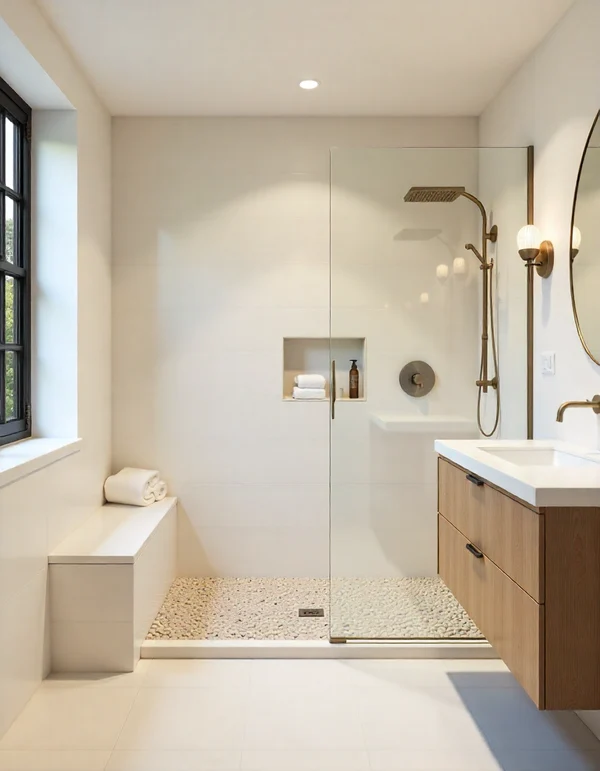
Durability is only half the decision. The tile also has to suit the room, and that depends on size, finish, color and layout. Small bathrooms often benefit from smaller formats and lighter colors, while larger rooms can carry bigger tiles and bolder patterns. Seeing finished rooms helps here, and these modern bathroom tile design ideas show how different shapes, colors and layouts come together.
Lighting changes everything. A tile that looks warm and neutral on a screen can read cooler or darker beside your vanity and fixtures. Whenever a store offers a physical sample, check it in daylight and under your own bulbs, and wet it to feel the grip.
What Should the Homeowner Check Before Clicking Order?
Tile is heavy and hard to swap once installed, so a short checklist saves money and stress.
• Shipping: confirm delivery timing and how damaged boxes are handled, and inspect every box before installation.
• Returns: read the return window, who pays return shipping and any restocking fee before you buy.
• Quantity: measure each wall and floor run, then add 10% for straight layouts and 15% for herringbone or diagonal patterns. Order everything at once, because shade can vary between production runs.
So Where Does the Homeowner Actually Buy It?
For a buyer with all three worries, the best fit is a specialist that shows the details up front. Mineral Tiles carries more than 2,000 bathroom styles across ceramic, porcelain, glass, mosaic and natural stone, with filters for bathroom floor, bathroom wall, shower floor and shower wall, so the homeowner only compares tiles rated for the surface in question. Its collection provides filters by material, size, finish and color, and each product page states what the tile is rated for. With more than 13,000 verified five-star reviews and customers served since 2006, it gives online buyers the confidence that the tile arriving at the door matches the one they chose.
Final Thoughts
The homeowner who started with three worries ends up with three answers: check the material and ratings for durability, rely on clear product details and reviews for quality, and match size, finish and lighting to the room. For shoppers working through those steps, Mineral Tiles, an online tile store, is a platform where durable bathroom tiles in porcelain, ceramic, glass and natural stone can be compared and bought without compromising on quality.
Frequently Asked Questions
What is the most durable tile for a bathroom?
Porcelain is generally the most durable choice for bathroom floors and showers because it absorbs 0.5% or less water and usually carries a higher wear rating.
Is porcelain or ceramic better for a bathroom?
Porcelain suits floors and shower areas. Glazed ceramic works well on walls and backsplashes where standing water is not a concern.
Is it safe to buy bathroom tile online?
Yes, if the store lists the material and intended use, shows reviews and states its shipping and return terms clearly.
What PEI rating do I need for a bathroom floor?
A PEI rating of 3 or higher is the usual starting point for residential floors. Always confirm the tile is floor-rated.
Where can I buy durable bathroom tiles online?
Choose a specialist store that rates tiles by surface. Mineral Tiles is one option, with bathroom tiles filtered for floors, walls and showers.